They dream of chandeliers and sweeping staircases, of vineyard views and stone archways - but the real opportunity isn’t in the finished château. It’s in the one with a collapsed roof, ivy cracking the walls, and floors that groan underfoot. In the Gironde, where history seeps from every limestone block, a growing number of buyers are turning away from polished estates and toward ruins. Why? Because behind the dust and decay lies unmatched potential: the chance to shape a legacy, not just inherit one. Restoring a French château isn’t about fixing up an old house - it’s about redefining what value means in the world of luxury real estate.
Financial and cultural benefits of restoring french chateau Gironde renovation
Choosing to restore a historic property in the Gironde isn’t just an aesthetic decision - it’s a calculated investment strategy. The entry price of a dilapidated château can be 30 to 50% lower than a comparable turnkey estate, even when both sit on the same type of land and share similar architectural roots. That gap isn’t a flaw - it’s equity waiting to be unlocked. For those seeking a tangible heritage project, few ventures are as rewarding as buying a château to restore in the Gironde.
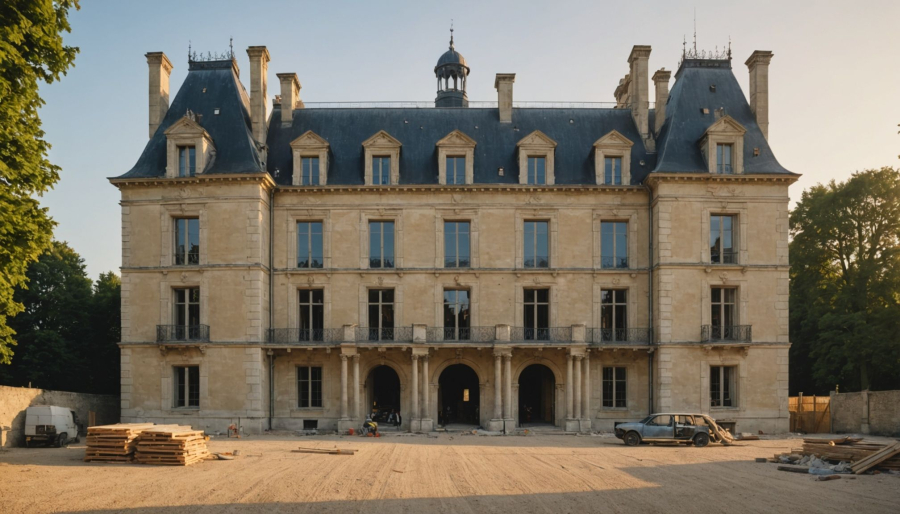
The equity gain of historic preservation
When you buy a château in disrepair, you’re not paying for comfort - you’re paying for possibility. A property that appears to be a bargain on paper can, after restoration, command prices far above its original cost. The key lies in the transformation: turning structural weakness into architectural authenticity, and outdated systems into modern luxury. This model - buy low, restore thoughtfully, create value - is what defines the most successful heritage investments in the Bordeaux region.
Tax incentives and heritage grants
France offers powerful financial levers for those who commit to preserving its architectural legacy. Under schemes like the Loi Malraux, investors can benefit from significant income tax reductions when restoring properties in designated historic zones. For buildings classified as Monument Historique, the incentives go further: eligible renovation costs may be fully deductible from taxable income, provided the owner agrees to maintain the property’s heritage integrity over time. These aren’t loopholes - they’re state-backed tools designed to keep history alive.
| Investment Type | Value Addition Potential | Tax Advantages | Management Complexity |
|---|---|---|---|
| Turnkey luxury château | Moderate (limited customization) | Minimal (no major works) | Low (ready to occupy) |
| Minor renovation project | Medium (interior upgrades, extensions) | Some (partial eligibility for incentives) | Moderate (short-term disruption) |
| Major structural restoration | High (complete transformation, premium positioning) | Significant (full access to Malraux or MH benefits) | High (multi-year planning, specialist oversight) |
Navigating the complexities of architectural heritage
A château in the Gironde isn’t just a building - it’s a piece of living history. That means any restoration must respect not only the structure itself but the legal and cultural frameworks designed to protect it. From Bordeaux’s UNESCO-listed urban core to the vineyard estates of Saint-Émilion, alterations to historic facades, roofs, or grounds are subject to strict oversight. Ignoring these rules doesn’t just risk fines - it can derail a project for months, or even years.
Working with the Bâtiments de France
The Architecte des Bâtiments de France (ABF) plays a central role in any major renovation within protected zones. Their approval is required for changes to exterior elements - from window frames to roofing materials - especially within 500 meters of a listed monument. This isn’t bureaucracy for its own sake. The ABF ensures that restorations preserve the architectural harmony of the region. Their input often shapes everything from color palettes to drainage solutions, making early consultation essential.
Selecting specialized artisans in the Gironde
Modern builders won’t cut it when you’re working with 18th-century stone walls or timber frames that have settled over centuries. What you need are craftsmen who understand limestone masonry, traditional jointoiement à bandes, and the art of restoring rather than replacing. In the Gironde, a network of skilled artisans exists - stonemasons, carpenters, and plasterers trained in heritage techniques - but finding them requires more than a Google search. It demands relationships, referrals, and often, site visits to past projects.
Strategic planning for a successful restoration project
Emotion drives the initial decision to buy a ruin. But once the keys are in hand, strategy takes over. A château restoration isn’t a home renovation scaled up - it’s a multi-phase development project with unique risks and rewards. The difference between success and overspending often comes down to planning: knowing when to act, when to wait, and how to sequence work without derailing cash flow.
Phased renovation vs. full-scale overhaul
One of the smartest moves? Moving in early - not into the main house, but into a converted outbuilding or guest cottage. A phased approach lets you complete the primary living quarters first, reducing rental or hotel costs while generating oversight of ongoing work. It also spreads out expenses, avoiding the strain of funding a full shutdown. A full-scale overhaul might look faster on paper, but it often leads to budget overruns and logistical chaos.
Modernizing luxury amenities in a historic shell
Today’s buyers expect comfort, even in a centuries-old château. That means integrating geothermal heating, smart home systems, and high-performance kitchens - all without compromising authenticity. The trick is subtlety: embedding underfloor heating beneath antique tiles, concealing wiring in historic moldings, or using solar tiles that mimic traditional slate. Luxury isn’t just visible - it’s felt in the silence of a perfectly climate-controlled room.
- Conduct a full structural audit - focus on roof integrity and foundation stability before finalizing purchase
- Build a budgetary buffer of at least 15 to 20% to cover unexpected issues like dry rot or soil instability
- Map out the permit application timeline early - ABF reviews can take several months
- Source local materials whenever possible, from Gironde limestone to reclaimed timber, to maintain authenticity
- Integrate sustainability from the start, including rainwater harvesting and energy-efficient insulation
Assessing the long-term ROI of luxury restoration
The ultimate measure of a restoration project isn’t just how beautiful the result is - it’s how well it performs as an asset. In the Bordeaux region, where prestige properties are both scarce and highly sought after, a well-executed château renovation doesn’t just recoup costs - it generates lasting value. And that value comes in more than one form.
Yields from upscale tourism and hospitality
Many restored châteaux now serve dual purposes: private residence and income-generating estate. Converting part of the building into luxury guest suites, wellness spaces, or event venues can offset ownership costs significantly. Think weddings, corporate retreats, or curated cultural stays. In prime locations, nightly rates for high-end short-term rentals can reach 1,500 € or more during peak season - turning dormant space into a revenue stream.
Resale value in the Bordeaux prestige market
A fully restored château in the Gironde isn’t just a home - it’s a blue-chip real estate asset. The pool of well-preserved, authentically renovated properties is small, and demand from international buyers remains strong. Unlike new builds, which can feel generic, a restored estate carries a story - one that enhances its desirability and pricing power. In sought-after areas like Pessac or Caudéran, the per-square-meter value of a character property can exceed that of modern luxury homes.
The emotional dividend of stewardship
Let’s be honest - not every decision in a restoration makes financial sense. There’s the extra cost of hand-carved stone, the time spent sourcing period-appropriate hardware, the months waiting for a specialist to repair a single ceiling rose. But for many owners, that’s the point. There’s pride in knowing you didn’t just buy a house - you saved a piece of history. And that kind of legacy? It doesn’t show up on a balance sheet, but it lasts far longer than any ROI calculation.
Common Questions
Is it possible to live in the château during a major renovation?
Yes, but only if you plan carefully. Many owners opt to restore a smaller wing or outbuilding first, using it as a temporary home while the main structure is worked on. This allows you to oversee progress daily while maintaining comfort and privacy. Temporary utilities and kitchen setups can make the transition smoother.
How are eco-friendly materials impacting restoration trends today?
Sustainable restoration is no longer optional - it’s expected. Materials like hemp-lime insulation are now widely used for their breathability and thermal performance in old walls. Solar tiles that blend with traditional slate roofs help reduce energy use without compromising aesthetics. These choices improve efficiency while respecting the building’s integrity.
Where should a beginner start when evaluating a ruin's potential?
Start with the bones - not the beauty. A structural survey focusing on the roof, foundations, and load-bearing walls is essential before any aesthetic assessment. Water damage, subsidence, or timber decay can turn a dream project into a money pit. Know the condition first, fall in love later.
What is the primary maintenance task after the project is complete?
Regular roof inspections are critical. Even after restoration, historic roofs require annual checks for loose slates, blocked gutters, or moss buildup. Facade cleaning and repointing every 10 to 15 years also help preserve stone integrity. Preventative care keeps long-term costs down.
What legal guarantees protect the buyer against hidden structural defects?
The garantie décennale is your strongest protection. It requires contractors to insure their work for ten years against major structural failures. Always verify that your builder has this coverage before work begins. Additionally, a thorough diagnostic report before purchase can limit liability exposure.
